Delirium
A downloadable game for Windows
🩸 Overview & Core Concept ("The Institute")
Delirium is a first-person seated VR psychological survival horror experience developed in Unreal Engine 5.6 (OpenXR — Meta Quest & PCVR) by 3J Mad Studios for the MS5021 Game Studio 2 module at the University of East London—and selected as the sole Level 5 project to exhibit alongside final-year Level 6 graduation games at the Royal Docks Centre for Sustainability.
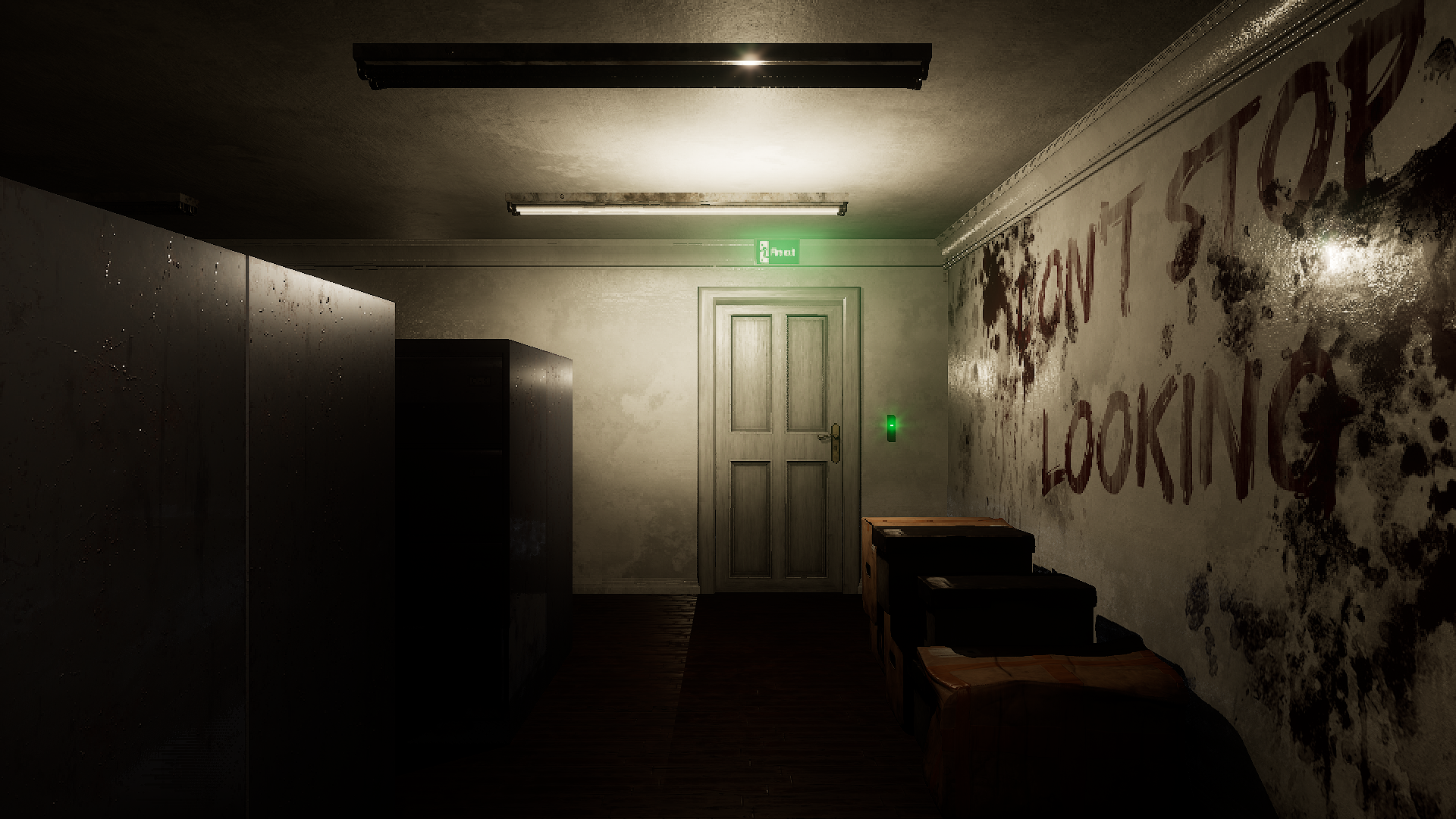
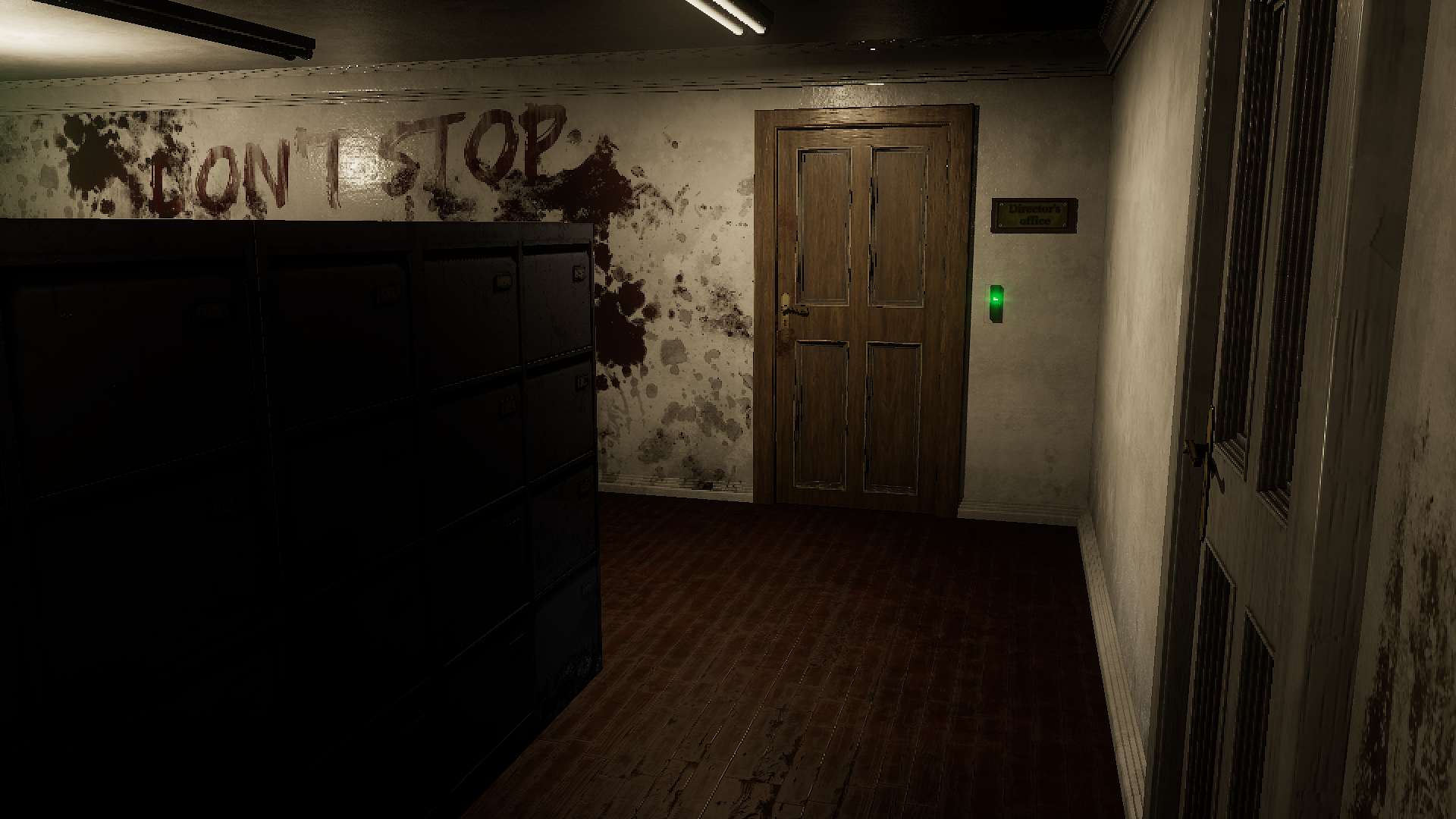
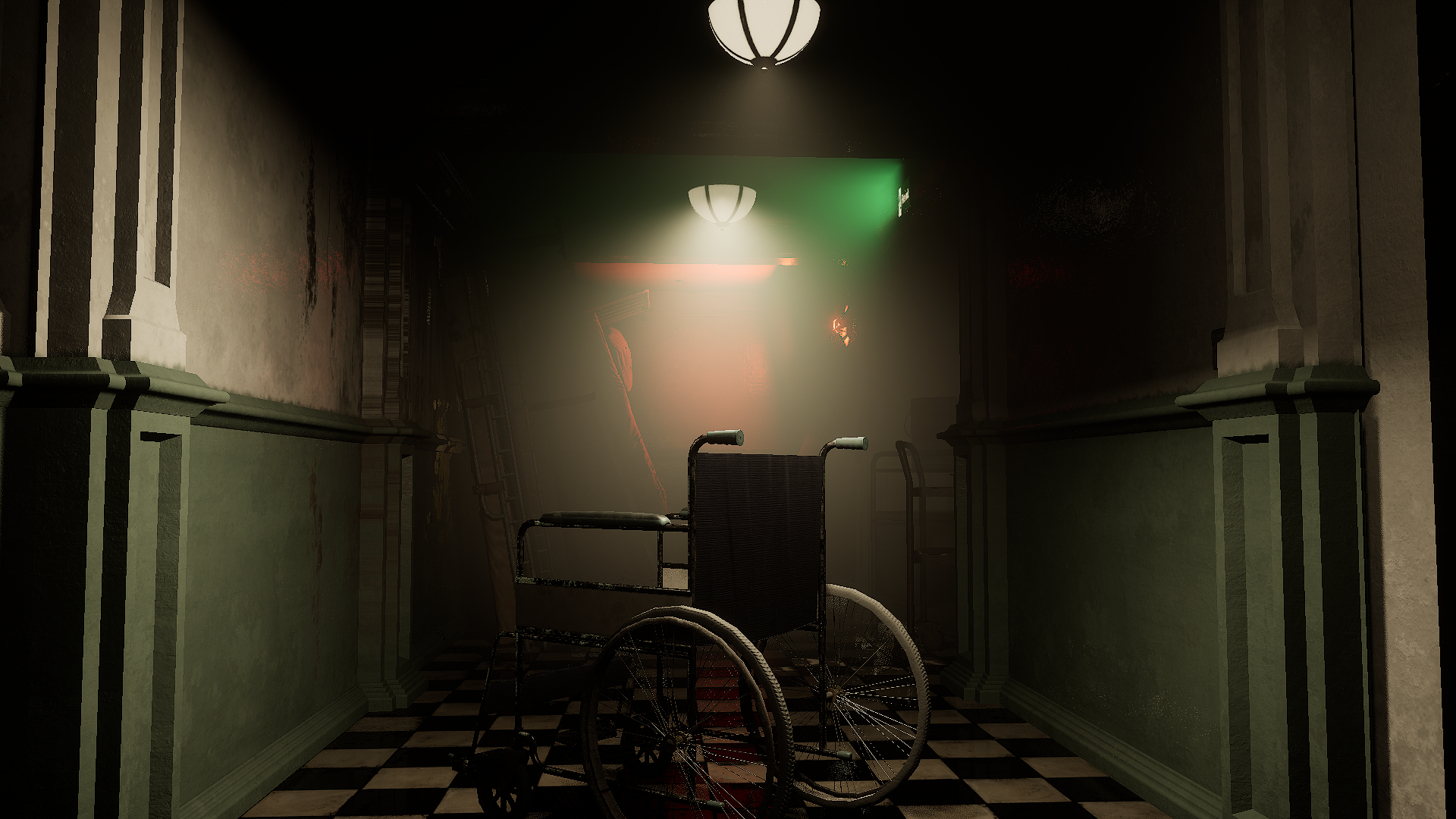
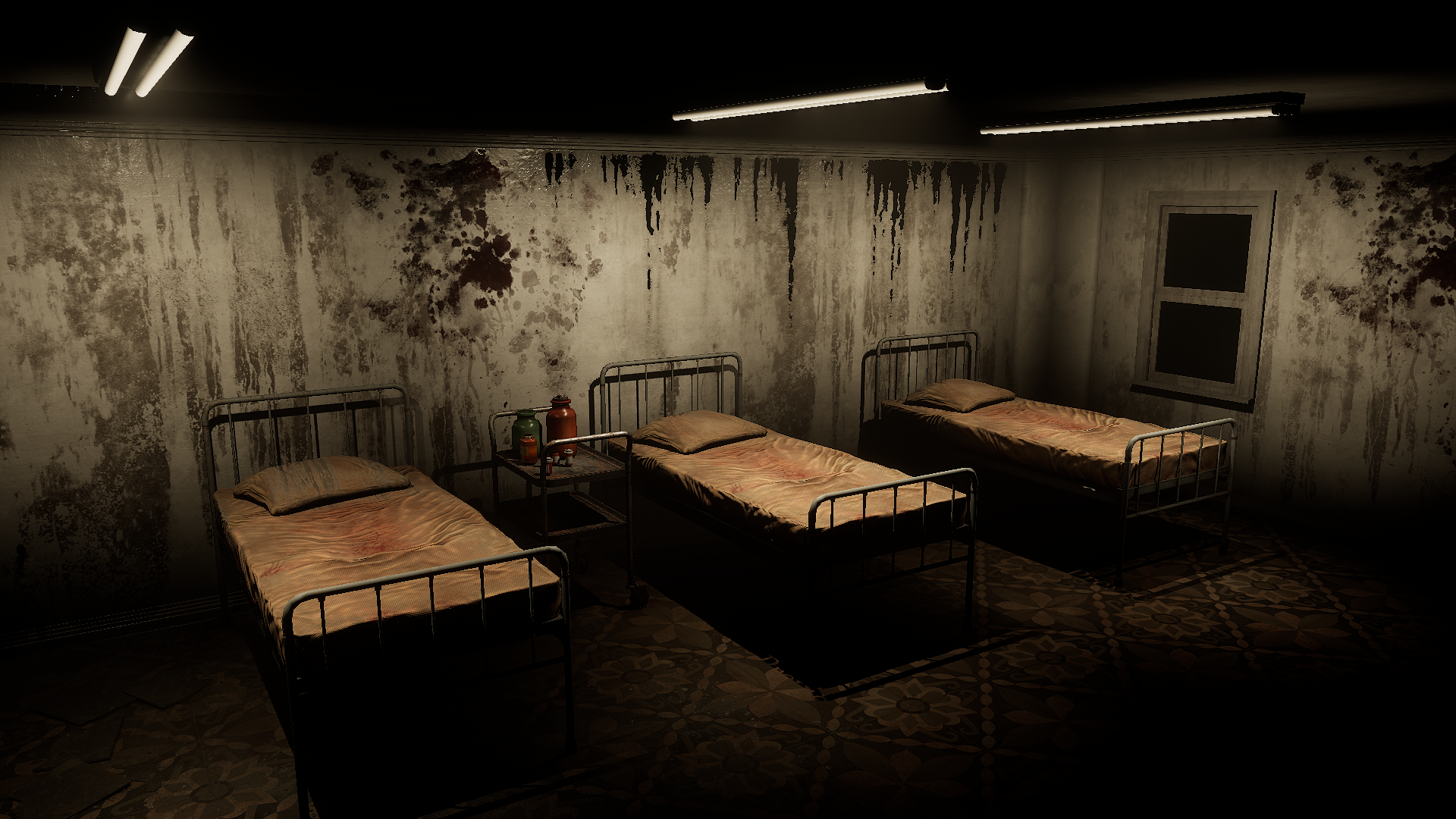
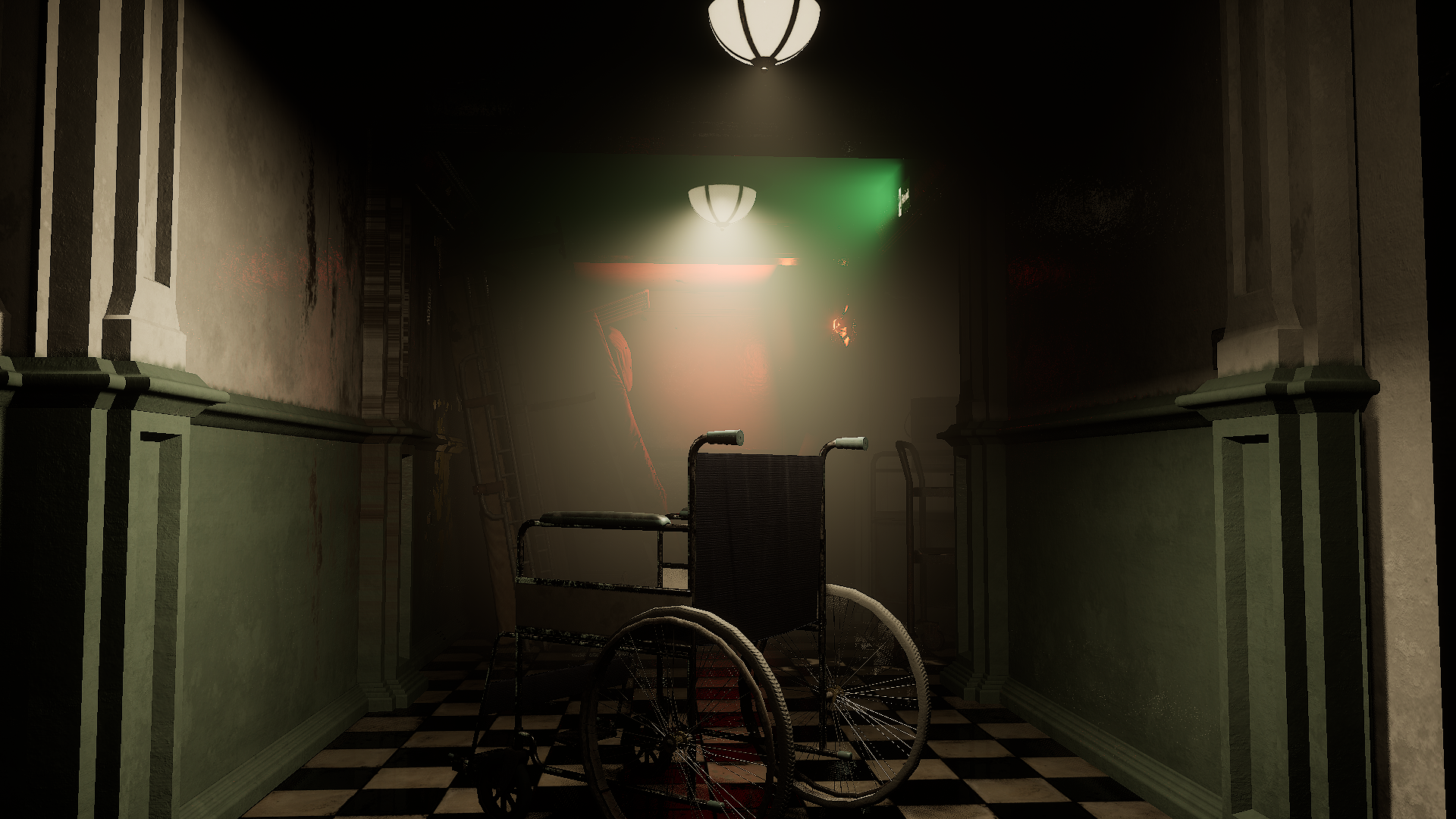
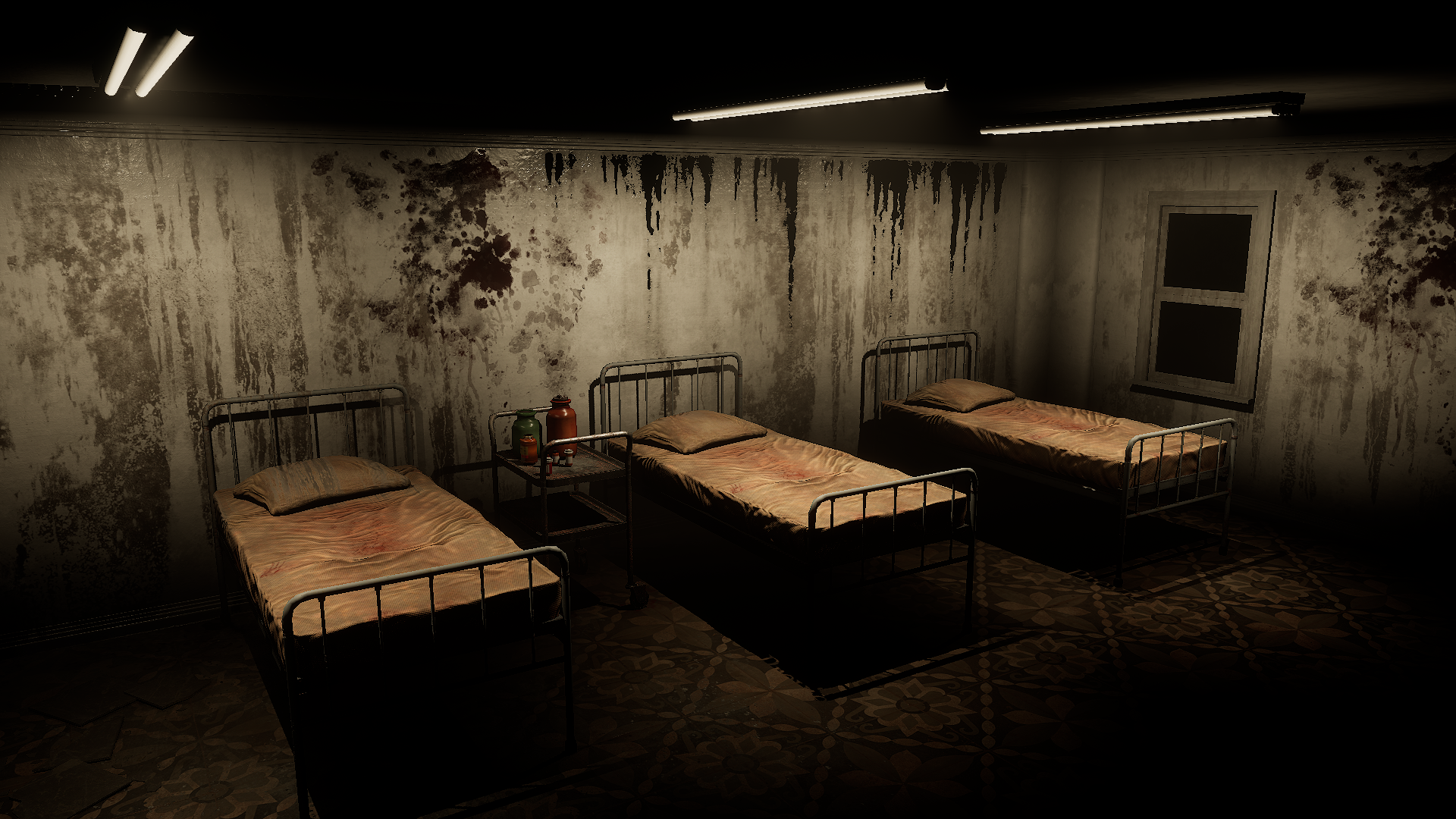
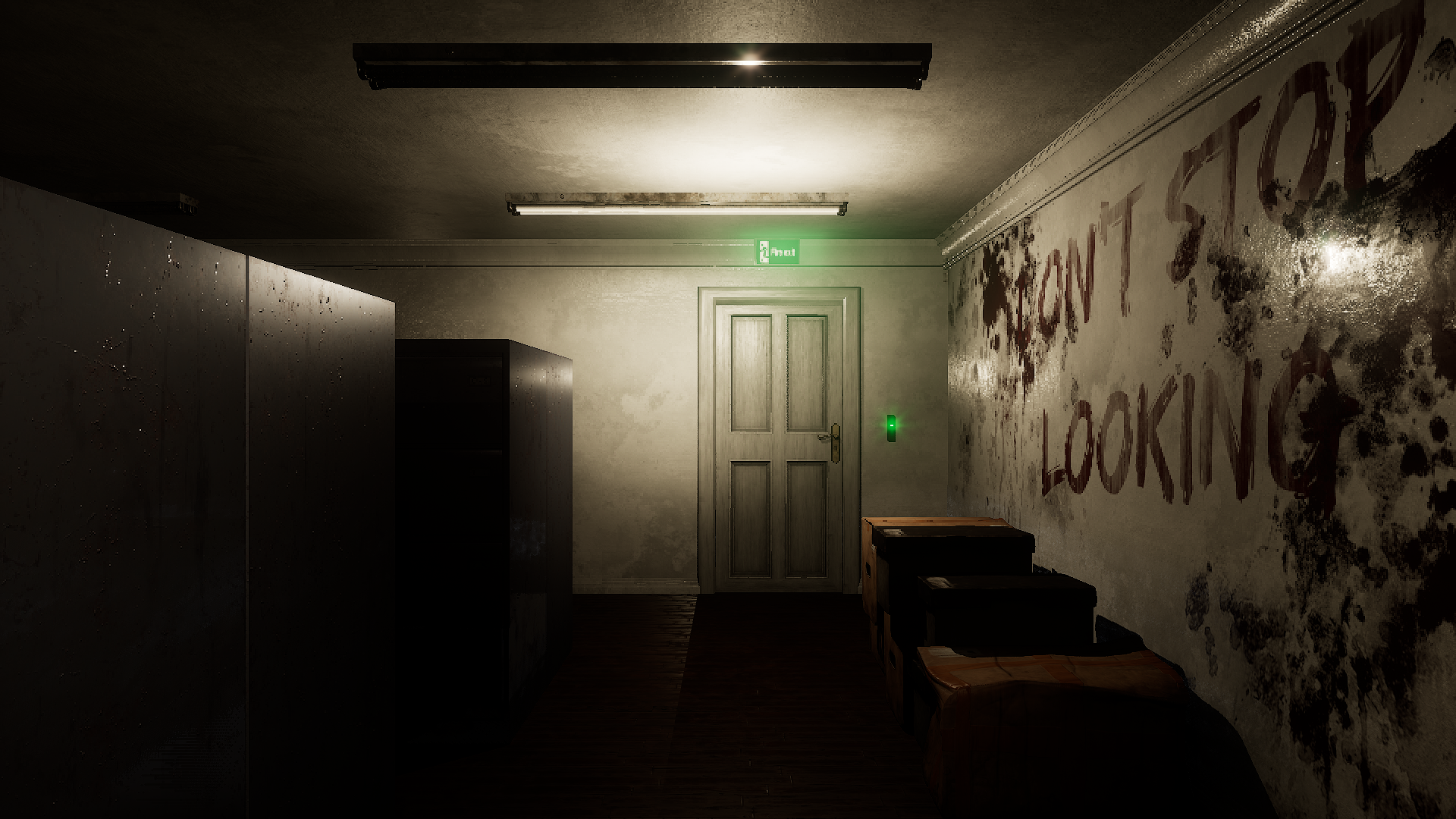
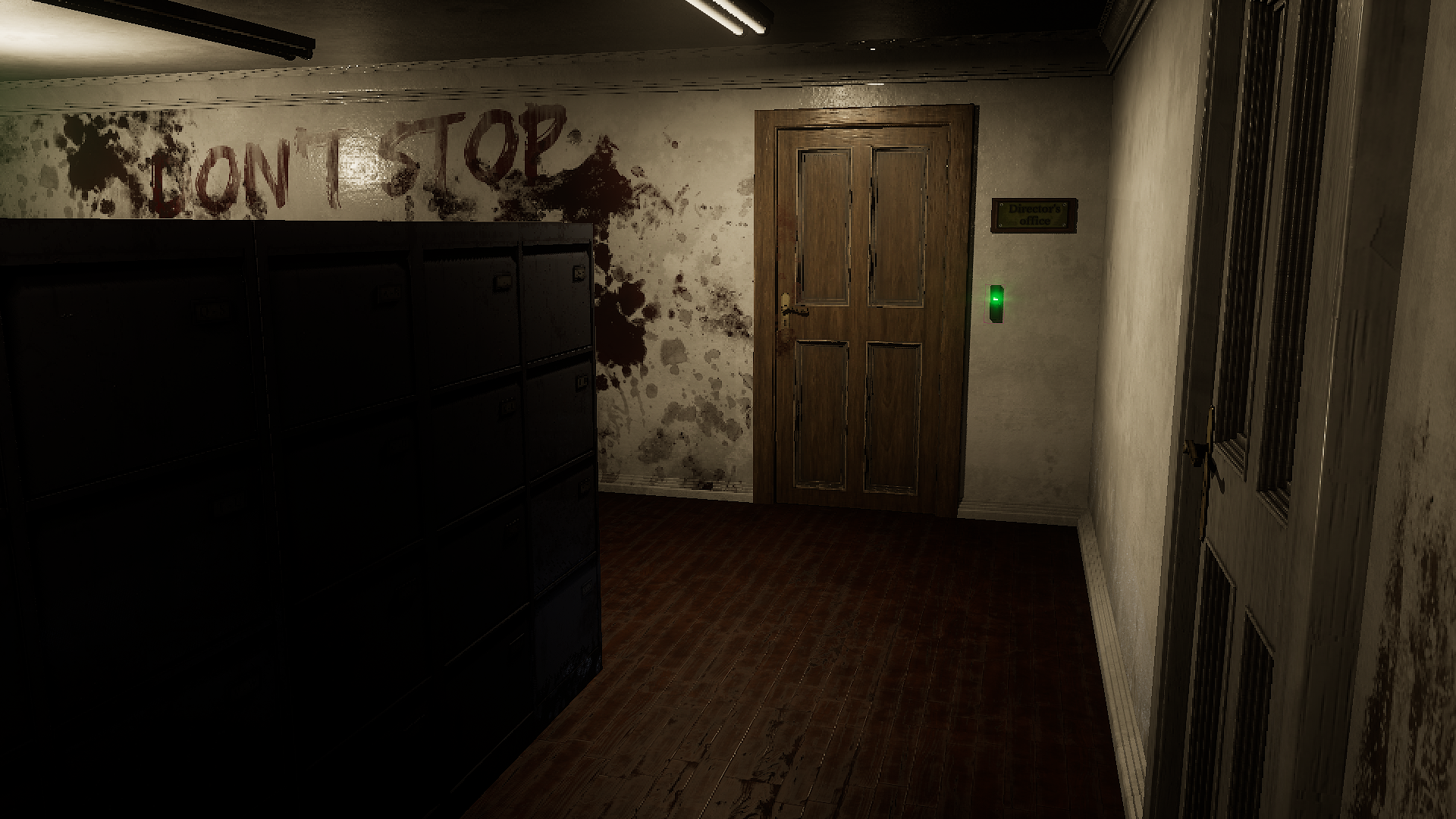
Designed around a tight, high-intensity 5-minute walk-up session time for immediate onboarding, you play as a blank-slate, non-combatant patient confined to a wheelchair inside "The Institute"—a crumbling, labyrinthine mental hospital that defies physics inside the patient's hallucinating mind. Blood-scrawled environmental warnings ("GET OUT", "IT'S NOT REAL", "THEY AREN'T REAL", "DON'T LET THEM TOUCH YOU", "DON'T STOP LOOKING") blur the line between warnings left by previous patients and your own subconscious paranoia.
♿ The Core Hook & 3-Mode Wheelchair Physics
Delirium combines the physical struggle and inertia of tank-control wheelchair movement with "Weeping Angel" quantum-observation horror mechanics, forcing players into a panicked choice: look forward to navigate, or look backward to survive—you cannot do both effectively at the same time. The wheelchair is engineered with intentional physical weight and inertia (it does not accelerate instantly), creating genuine vulnerability and physical fatigue when fleeing:
- Primary Immersive Control — Realistic Mode: Reach down to physically grip and swing your arms along the virtual wheelchair rims using 6-DOF VR motion controllers. Pushing both hands forward moves the chair; pushing one hand forward and pulling the other back rotates the chair in place (differential tank drive).
- Semi-Realistic Mode: Pull your arms backward in rhythmic strokes to propel yourself smoothly through tight hospital corridors.
- Secondary Accessibility Control — Dual Analog Joystick Mode: Left Analog Stick controls the Left Wheel and Right Analog Stick controls the Right Wheel—preventing physical overexertion and ensuring full accessibility.
- Reverse-Gaze Penalty Rule: If the player attempts to cheese the observation mechanic by swinging the wheelchair in reverse while staring directly at The Staff, the entity immediately triggers a fatal jumpscare and resets the player to the last "Geometry Shift" checkpoint.
👁️ Quantum Observation AI ("The Staff") & Body-Horror Evolution
The hospital's relentless pursuers—"The Staff"—adhere to strict Quantum Observation rules tracked against the player's VR headset camera frustum:
- State A — Observed (Safe): Whenever within the player's camera frustum (field of view), the entity freezes completely still. Up close, the frozen model subtly vibrates and twitches accompanied by a low-frequency audio hum, while the stethoscope in its hand continues to swing back and forth like a pendulum.
- State B — Unobserved (Danger): The instant the entity leaves your field of view—or when the hospital lighting degrades into a blackout—it stalks at high speed toward your wheelchair accompanied by rapid, wet footsteps and shuffling sounds.
- Surgical Body-Horror Evolution: Beginning as ordinary figures in medical scrubs and lab coats with blurred features, The Staff glitch and morph as they close in (inspired by Still Wakes the Deep, Doctor Who, and SCP-173). In its final form, the entity's face is carved in half and held at an angle by surgical K-wires exposing the raw musculature beneath (tilting its head so the front faces you when calling out), its chest is hollowed out with peeled-back skin, and stethoscopes fuse into its flesh.
- Reversed Speech & Microphone Noise Detection: The Staff speak English reversed and slowed down (e.g.,
"tneitaP ,ereh kcab emoC"for "Come back here, Patient"), paired with a threshold-based VR microphone noise system where speaking or heavy breathing draws the entity into hunt mode faster.
🚪 Non-Euclidean Object Permanence, "Geometry Shift" Checkpoints & The Rainbow Room
Modeled on the real-world architectural floorplan of the UEL Docklands West Building (1st Floor) mapped in Microsoft Visio, the hospital environment only exists where the player looks:
- The Vanishing & Level Checkpoints: If you wheel down a corridor or pass through a door and look back, the hallway you just came from vanishes—replaced by a solid brick wall or a sheer drop into The Void. Internally, each geometry switch acts as a seamless level checkpoint (e.g., Phase 1: Admission Tutorial from the opening elevator doors with sterile white tiles and visible floor/ceiling → Phase 2: Corridor Seals Shut behind your back as the first Doctor spawns).
- The Loops & Environmental Changes: Looking away and looking back shifts doors into brick walls, rearranges chairs, swaps wall photographs, and spawns new blood-scrawled messages.
- The Rainbow Room (Contrast Safe Zone): A special narrative-pacing zone featuring hyper-saturated colors, floating objects, impossible geometry, and warped music-box audio—providing a surreal dreamlike contrast to the sterile grey hospital ward where no enemies can enter.
- Tactile VR Puzzles Under Escalating Pressure: Search desk drawers, inspect X-Ray sheets to reveal hidden keypad codes, spot the difference between objects in identical rooms, and physically swipe security keycards and replace electrical fuses. The longer a puzzle takes to solve, the faster The Staff moves and the faster room lighting degrades.
🧠 Zero-HUD Diegetic Sanity System & VR Comfort Engineering
Rejecting traditional health bars and cluttered VR HUD overlays, player sanity and threat proximity are communicated 100% diegetically through the environment and audio landscape:
- Healthy State: World geometry is solid, fluorescent hospital lighting is stable, and both floor and ceiling are clearly visible.
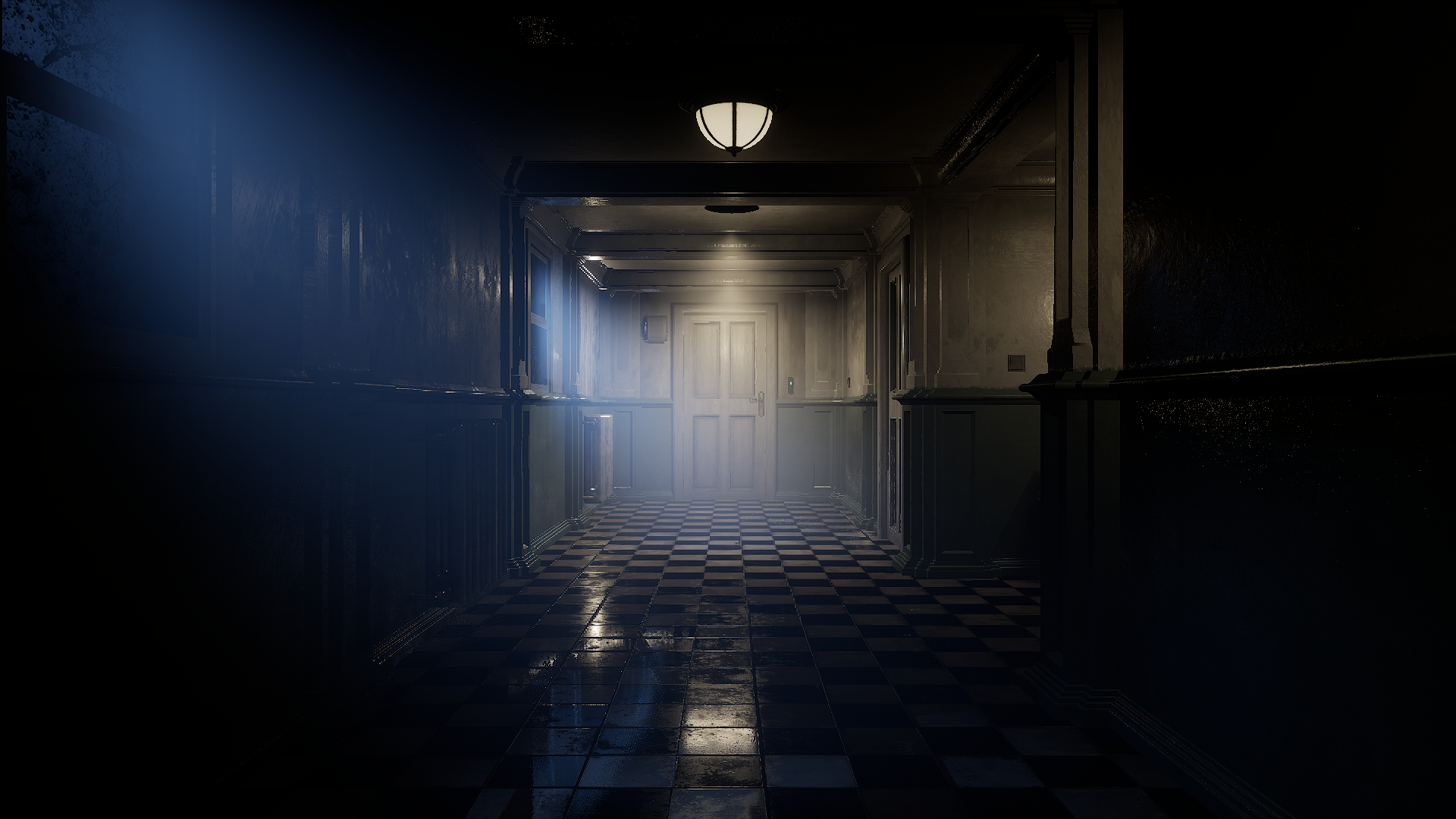
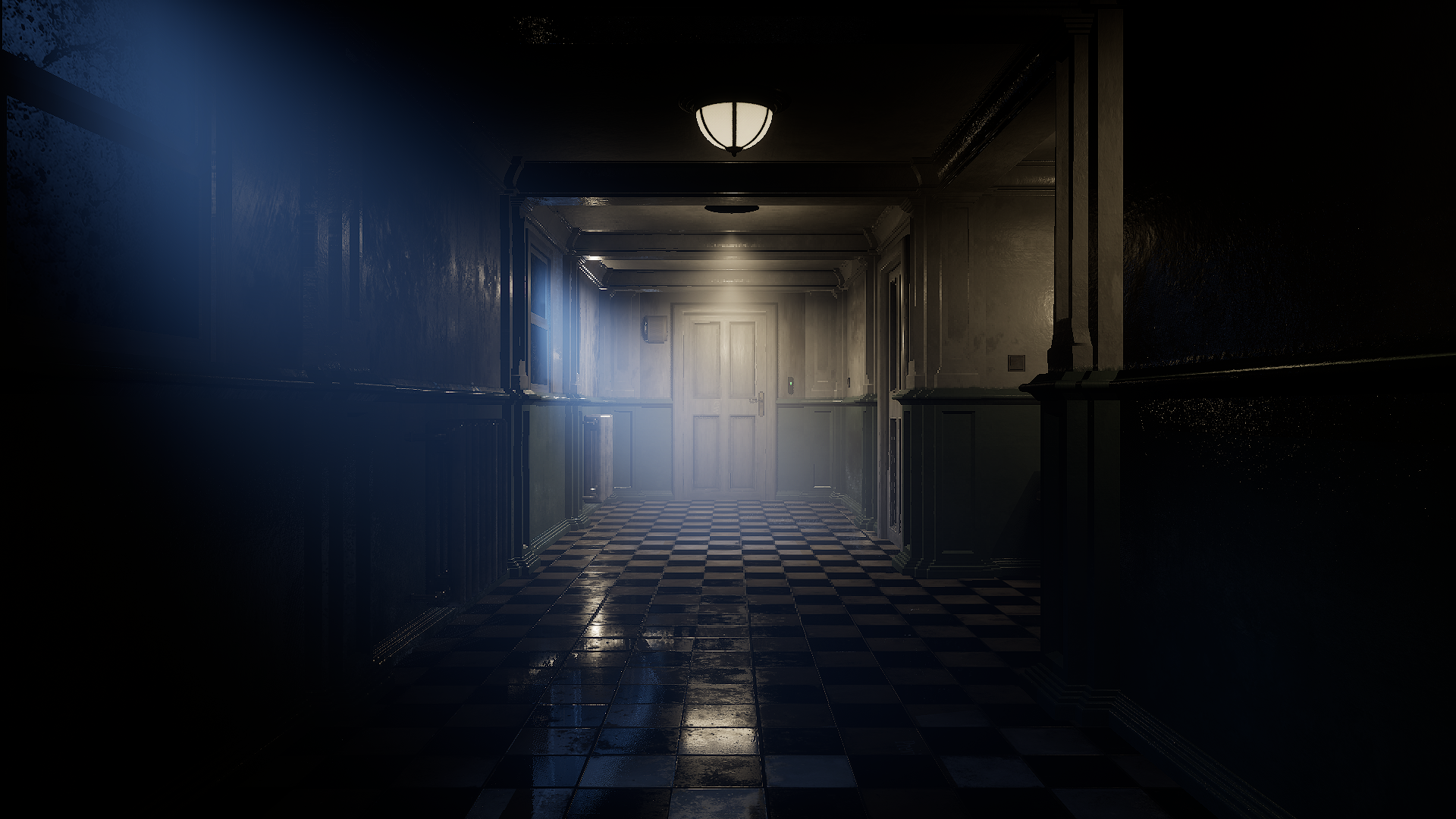
- Insane / Endangered State ("The Void"): As sanity slips or enemies close in, dense black fog obstructs the floor and ceiling of the map, accompanied by Chromatic Aberration and subtle FOV vignetting/fading (carefully chosen after GDD risk analysis showed FOV stretching risked VR motion sickness).
- Diegetic Audio Feedback: Looping wheelchair wheel squeaks dynamically reflect movement velocity, while spatialized heavy breathing, heartbeat haptics, industrial ward drones, and reversed whispers escalate with enemy proximity.
📊 Design Evolution, Risk Mitigation & Commercial VR Arcade Pitch
- Brainstorming Evolution: Evolved from four initial prototypes documented in our design bible—Idea 1 & 2 (Acoustic Eardrum & Item-Based Player Scaling in Brutalist/Sci-Fi Escape Rooms), Idea 3 (Brutalist Megalophobia Cityscape inspired by Tsutomu Nihei & Concrete Tremor), and Idea 4 ("Escape UEL" Mental Hospital Wheelchair & Perspective-Shift Horror inspired by Superliminal, Viewfinder, Dredge, and P.T.).
- Commercial VR Arcade & Streamer Strategy: Scoped around an £8,900 production budget breakdown and a 5-minute high-turnover gameplay loop ideal for commercial VR arcades, pop-up exhibitions, and high-reaction streamer/influencer content on Quest and PCVR.
- Included Design & GDD Archive (
Delirium_GDD_and_Design_Notes.zip): Downloadable below alongside the playable VR build! Includes Joshua Johnson's full Game Design Document (GDD), original Mental Hospital Idea concept notes, Narrative Template, Brainstorming Bible, Sprint 1–4 Retrospectives, Pitch Presentations, Microsoft Visio Hospital Flowcharts (.vsdx), custom Adobe Illustrator (.ai/.png) UI Menus, and the full 401-message 3J Mad Studios Teams Development Log.
👥 Credits — 3J Mad Studios (MS5021 Team B)
- Joshua Johnson: Game Designer, GDD & Narrative Author, Original Concept Creator (Mental Hospital Idea), Custom UI/Menu Designer (Illustrator & UE5 3D Widgets), 4K Cinematic Intro Sequence Creator (
IntroSequence.mp4), Visio Level Flowchart Architect & Producer - Dhrumil Nitinbhai Hirapara: Lead VR & Gameplay Systems Programmer (Wheelchair Locomotion Physics, Weeping Angel Frustum AI, Keycard/Keypad Puzzle Logic)
- Jose Roberto Gálvez Vargas: Environment Artist & UE5 Hospital Level Builder
- Aiden Thomas Billingham: 3D Prop Artist (Wheelchair & PBR Keypad Models)
- Matas Narusis: Gameplay Programmer & Technical Support
- Jasmine Rose Jilley: Character Concept & 3D Artist ("The Staff" K-Wire Surgical Entity)
🔗 Official Links & Portfolio
- LinkedIn Profile: linkedin.com/in/joshgamedev
- More Projects by Joshua Johnson: joshej.itch.io
Download
Install instructions
1. Playable VR Build (Lev5_VRGame_V04.zip — 890 MB):
- Download and extract
Lev5_VRGame_V04.zip. - Connect your OpenXR-compatible VR headset (Meta Quest 2 / 3 / Pro via Quest Link / AirLink, or PCVR / SteamVR).
- Launch
Lev5_VRProject.exewhile seated and choose your wheelchair propulsion mode in the Controls menu (Realistic Arm-Swing, Semi-Realistic Pull, or Accessible Dual-Stick).
2. Complete Game Design Document (GDD), Notes & UI Archive (Delirium_GDD_and_Design_Notes.zip & Game Design Document.docx):
- Download
Delirium_GDD_and_Design_Notes.ziporGame Design Document.docxabove to inspect Joshua Johnson's complete Game Design Document (GDD), original Mental Hospital Idea concept notes, Narrative Template, Brainstorming Bible, Sprint 1–4 Retrospectives, Pitch Presentations, Visio Level Flowcharts (5021 Map Flowchart.vsdx), and Illustrator UI Menu source files.
Leave a comment
Log in with itch.io to leave a comment.